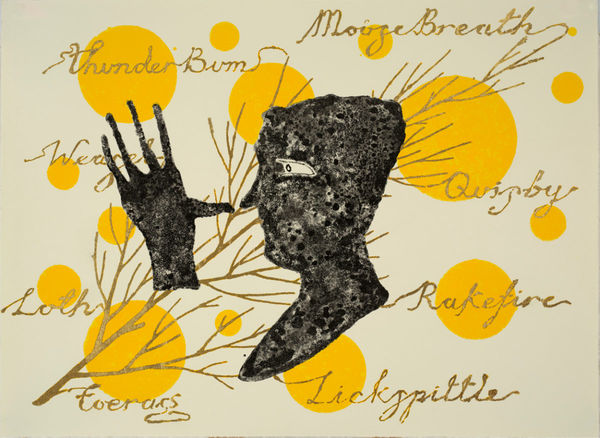
In this collection, Stephen Chambers reflects on the urgent environmental crisis and the role of art in addressing it. He makes the point that humanity’s responsibility today is to "emphasise, accept, and encourage action," particularly in response to environmental destruction. Chambers' work, especially in recent years, focuses on nature and its fragility. He uses imagery such as gilded trees (the Midas Trees) with 24-karat gold and burnt elements. The contrast between the permanence of gold and the unpredictability of fire speaks to the tension between nature's enduring beauty and the destructive forces threatening it.
Of the print series I Bite, I Sting, Chambers explains, “The personal, complete title, for these prints is: ‘I Bite & Sting…(and You’d Better Believe it)’. Hopefully laced with levity, they are my personal riposte to the world in our current wonky times, the toil and the strains. They were drawn in Berlin and printed in London during the first Covid lockdown. I intend them to be an affirmative, jocular growl at those things which block our path. 12 animals that are likely to bite back should their tail be tweaked. They are, in that sense, all self portraits.”
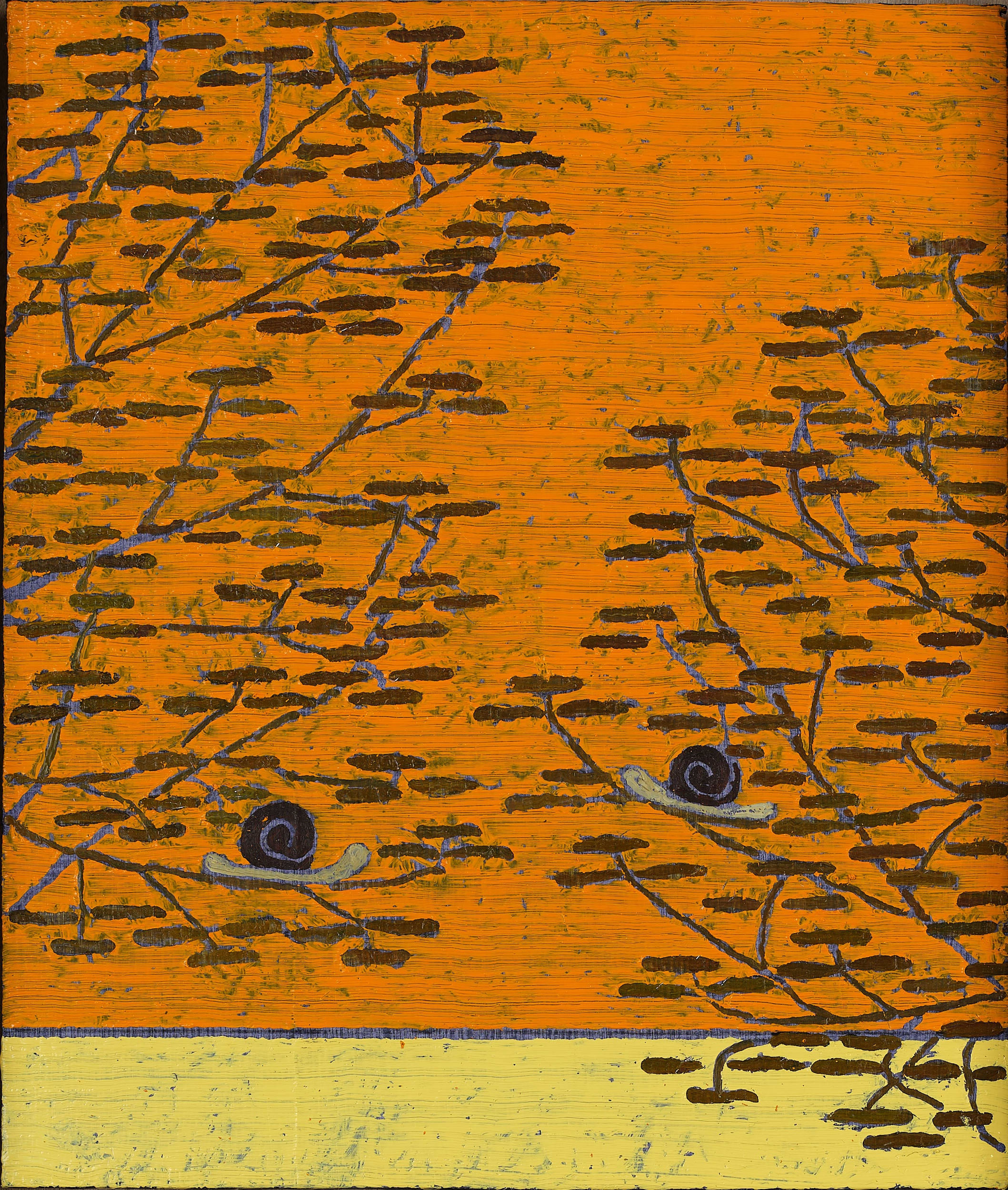
In his utterly enchanting painting series Snail Love, Chambers places the humble snail in the most beautiful contexts. "These paintings—created during the Covid year—explore close, but unbridgeable separation," he notes. They are about close, but unbridgeable separation. Their title, ‘Snail Love (Catalani)’, references the opera La Wally by Alfredo Catalani. Set in the Alps as winter descends. Two lovers become sundered by the deep snow on opposite sides of the valley. They sing across the chasm: sound, sight, but no touch. In the paintings these inamorati become snails; determined, persistent…. but unable to jump." Chambers describes the series as "little love poems."
Coming from a background in traditional two-dimensional painting, Chambers blends historical and contemporary perspectives in his work. He believes in the importance of referencing art history while also valuing the act of making—combining ideas with craftsmanship. His artistic approach reflects a passion for questioning, creating, and responding to the world. While he acknowledges that art cannot solve global crises, he firmly believes it has a responsibility to raise awareness and provoke thought.
This is the first time we have shown the work of Stephen Chambers, and we are delighted to welcome him to the gallery. Stephen collaborated with my father, Hugh Stoneman, on prints many years ago, and I have long admired his work. It is always a pleasure to work with artists like Stephen, who possess such a deep love and understanding of printmaking, embracing it as an art form in its own right.
-
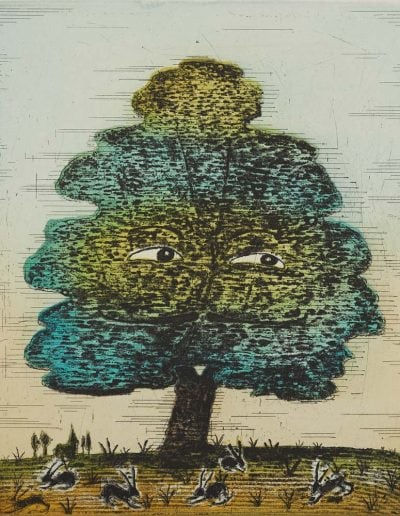
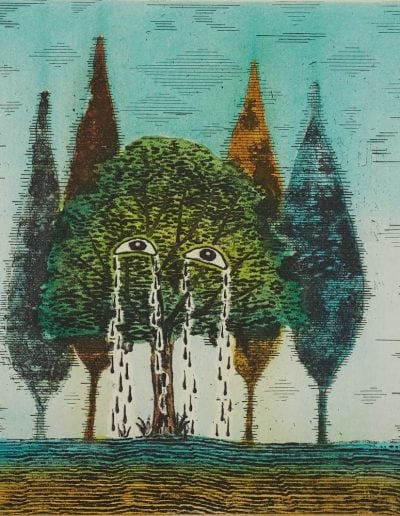
THE TALKING TREES OF ENGLAND
Set of four etchings, Edition of 40 -
I Bite & Sting
Set of 12 Etchings, Edition of 25 -

-
-
Penguin Classics
Journey Without Maps – East & WestScreenprint, Printed on Arches Noir 250gms, Edition of 40 -
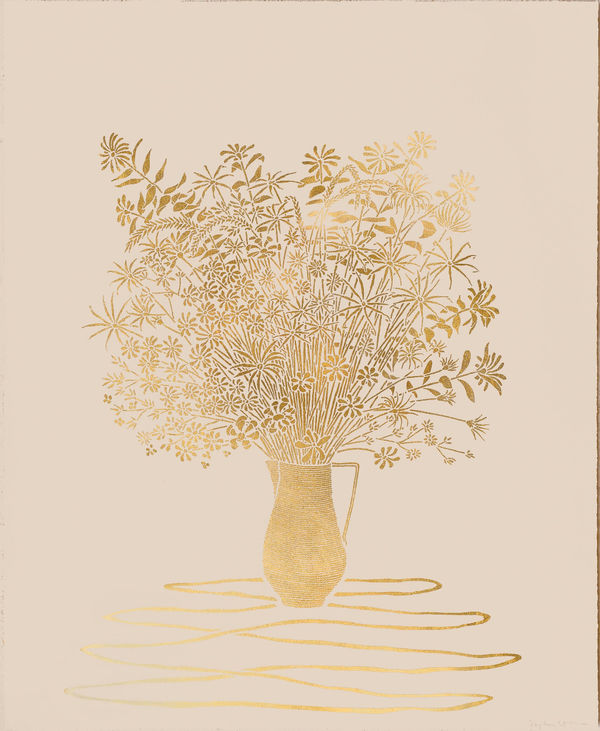
AURELIAN FLOWERS
SET OF 4 LITHOGRAPHS WITH 24CT GOLD LEAF -
Stealing Shadows
Six Lithographs -
-
Snail Love (Catalani 10)
32 x 26 cm, Oil on Panel, 2020, Stephen Chambers Studio"Their title, ‘Snail Love (Catalani)’, references the opera La Wally by Alfredo Catalani. Set in the Alps as winter descends. Two lovers become sundered by the deep snow on opposite sides of the the valley. They sing across the chasm: sound, sight, but no touch. In the paintings these inamorati become snails; determined, persistent…. but unable to jump. I see these images as little love poems".
Stephen Chambers
-
-
-
Book of Insults
Set of 2 lithographs with gold leaf, Edition of 25 -
Berlin Flowers (Yorck’s Vase Red)
70 x 80 cm, Oil on Linen, 2020, Stephen Chambers Studio"I know where ‘flower’ paintings stand in the hierarchy of art’s subject matter; beneath the sole of the boot. With that in mind these are paintings of empowerment; a wish to add gravitas to the maligned, give individuality to the familiar, and status to the downtrodden. These are meant as affirmative paintings, following the intonation that
'The ordinary is more extraordinary than the extraordinary'.
Made during the first Covid year. On the first Saturday of each month a bunch of seasonal flowers would be bought at the weekend market, put into a vase, and painted. Straight forward, vase dead centre, with as little sensation as possible. These are a record of the ’silent year’, as the season changed, through blossom; the measure of the months of pestilence".
-
-
-